

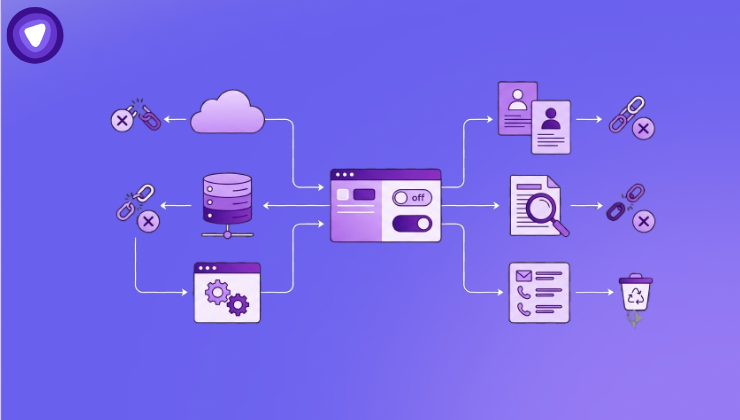
- SaaS companies are adding data broker removal to their privacy stack because customers now expect protection beyond encryption and password management.
- Data brokers already hold roughly 750 unique registered entities across five US states, and many more operate without registering at all.
- Removal effectiveness varies widely. Independent testing found some services removed under 30 percent of listings within three months.
- Regulatory pressure is rising, with California’s Delete Act and its new Enforcement Strike Force pushing brokers toward real compliance, not just registration.
- Most SaaS companies partner with an existing data broker removal provider instead of building broker relationships from scratch, which shortens the path to launch.
A privacy stack used to be short. A password manager. A VPN. Maybe two-factor authentication if the security team pushed hard enough. That list has gotten longer, and the newest line item catches a lot of product teams off guard: data broker removal.
SaaS companies that once treated privacy as a checkbox next to encryption are now shipping it as a standalone feature. This is not a marketing trend. It reflects a real change in what users expect and what regulators now require from any platform holding personal data.
This piece looks at why data broker removal has become a normal part of SaaS privacy stacks. It covers the exposure problem behind it, how buyer expectations have shifted, and what a team should check before adding the feature to a product.
Why Broker Exposure Has Become a SaaS Problem
Data brokers collect and resell personal information at a scale most users never see. Names, addresses, phone numbers, and household details move between hundreds of these companies every day, often without the person’s knowledge.
Five US states currently require data brokers to register. Once duplicate entries are stripped out, the combined registries list close to 750 distinct brokers. That number only covers brokers that comply with registration law. Many more operate without registering at all, since enforcement is still catching up to the industry.
For SaaS companies, this creates direct exposure. Any product storing customer names, emails, or billing details carries risk the company did not sign up for. A single data breach can feed that information straight into the broker ecosystem. Once a record lands on a people search site, it tends to stay there unless someone actively requests removal. This is exactly the gap a removal service is built to close.
The financial impact is measurable. Consumers reported losing more than $12.5 billion to fraud in 2024, a 25 percent jump from the year before. That surge tracks closely with how easily personal data can now be found online. When a SaaS company’s user base shows up on broker sites, part of that risk transfers to the company, even if the original breach happened somewhere else entirely.
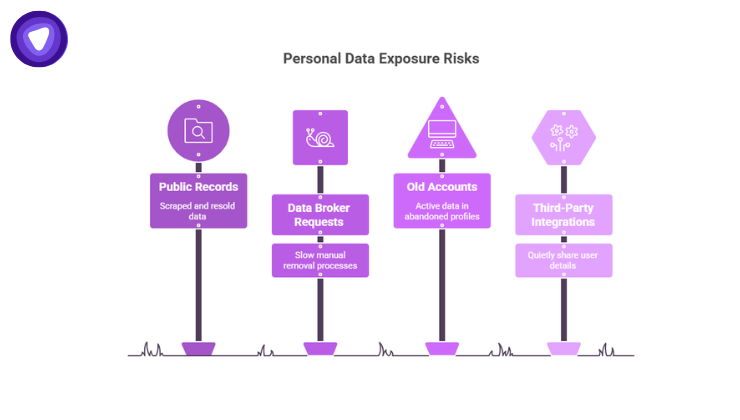
Common exposure points include:
- Public records scraped and resold without consent
- Removal requests stuck behind slow, manual review processes
- Dormant accounts still holding active personal data
- Third-party integrations quietly passing user details downstream
Data Broker Removal Is a Privacy Function, Not a Security One
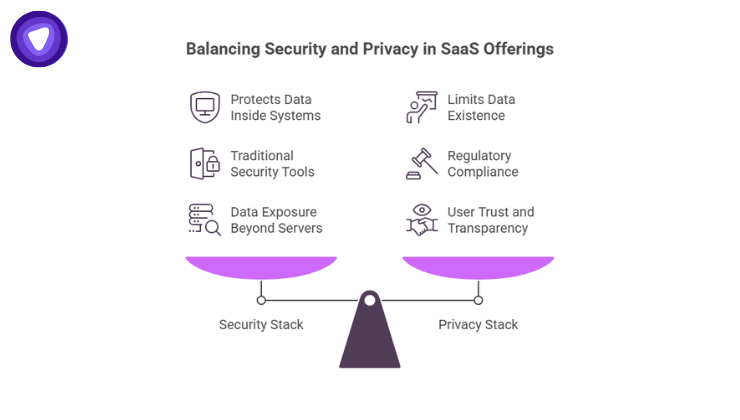
Security teams focus on stopping unauthorized access. Privacy teams focus on limiting what exists to be accessed in the first place. This work sits firmly in the second category, and that distinction changes how SaaS companies should think about building it in.
Encryption and firewalls protect data while it sits inside a company’s own systems. Neither one does anything once that data has already been scraped, purchased, or leaked onto a broker site. It covers the part of the privacy problem that traditional security tools were never designed to touch.
The Regulatory Push
Regulation is pushing in the same direction. California’s Delete Act created the Delete Request and Opt-out Platform, giving residents a single place to request removal across every registered broker in the state.
The California Privacy Protection Agency stood up a Data Broker Enforcement Strike Force in late 2025. That move signals a shift away from simply checking registration paperwork toward checking actual compliance behavior.
SaaS companies serving California users now face real pressure to support these deletion rights in practice. A privacy policy document alone no longer satisfies that expectation.
Other states are following a similar path. Oregon and Vermont use broader definitions of what counts as a broker, so their registries capture a wider range of companies. Texas built its registry more recently and is still populating it. SaaS companies operating across state lines now track several overlapping frameworks instead of just one.
The User Trust Factor
Trust is harder to quantify, but it matters just as much. Users increasingly ask what a SaaS product does with their information after they close an account. A platform that already offers data broker removal answers that question before it even gets asked.
This matters more for products handling sensitive categories of data, such as health, financial, or location information. Users in these categories tend to research a vendor’s privacy practices before signing up, not after the fact. A visible commitment to removing that exposure signals the company thinks about risk that extends beyond its own servers.
What Buyers Now Expect From a SaaS Privacy Offering
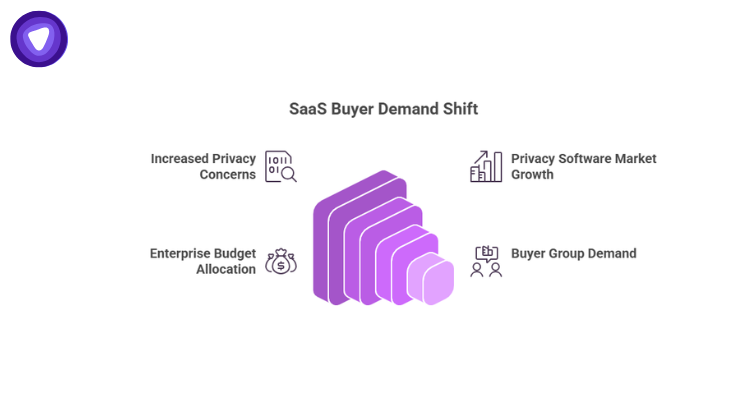
Procurement conversations have changed. Security questionnaires once centered mainly on SOC 2 certification and encryption standards. They increasingly include questions about data broker removal, dark web monitoring, and identity exposure tools.
The broader privacy management software market reflects this shift in demand. It is projected to grow from roughly $6.24 billion in 2026 to $17.63 billion by 2031, a compound annual growth rate above 23 percent. That growth is not driven by enterprise compliance software alone. A meaningful share comes from consumer-facing tools bundled directly into existing SaaS products.
Enterprise budgets back this up too. A recent industry benchmark study found that 38 percent of companies now spend $5 million or more annually on privacy programs, up sharply from the year before. Vendors that fold this feature into an existing subscription reduce that budget pressure instead of adding to it.
Two buyer groups are driving most of this demand:
- Enterprise IT and security teams trying to cut executive and employee exposure to social engineering and spear phishing
- Consumer SaaS platforms that want to differentiate on privacy without building broker relationships from scratch
Where Removal Services Fall Short of Their Claims
Not every removal tool performs the way its marketing suggests. This matters for any SaaS company deciding whether to build this capability in house or partner with an existing provider instead.
A field study tracked several paid removal services over four months against widely used people search sites. The most recognized name in the category managed to remove only 27 percent of listings within that window. Some services in the same study performed worse than manual opt-out requests submitted by hand.
The reasons are structural, not incidental. Broker sites change their opt-out flows often. A relocated button or a new verification step can quietly break an automated removal script. Brokers also re-list removed profiles months later. Services that count total requests sent, instead of tracking re-listings, end up reporting inflated success numbers.
This gap explains why SaaS companies stay cautious about which removal capability they choose to integrate. A weak implementation creates a false sense of security. That does more damage to user trust than having no removal feature at all.
The Rollout Path Most SaaS Teams Follow
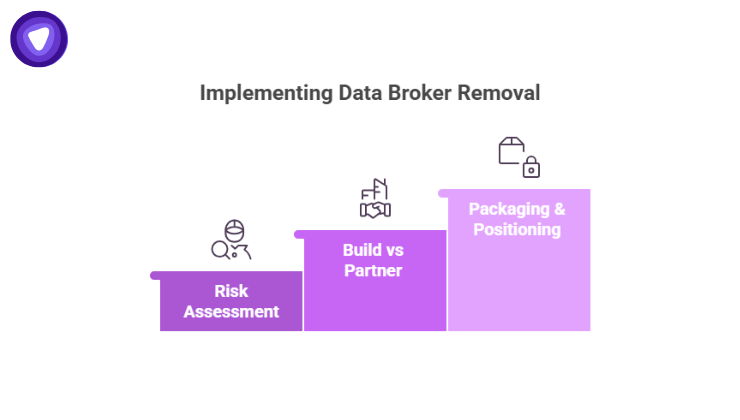
Adding data broker removal to a product roadmap rarely happens as a single decision. It usually moves through three stages, and each one answers a different business question.
Step One: Mapping the Data Footprint
Security and legal teams start by mapping what personal data the product actually stores. This includes names, emails, phone numbers, and any billing or shipping details tied to user accounts. Teams also check which US states their user base falls under, since broker registration rules vary by jurisdiction.
Step Two: Build In House or Partner Out
Very few SaaS companies choose to build broker relationships from scratch. Maintaining an opt-out pipeline across hundreds of broker sites takes constant monitoring, since sites change their forms and verification steps without notice. Most teams partner with an existing data broker removal provider instead, integrating the service through an API or a co-branded dashboard.
Step Three: Deciding How to Package It
Once the technical integration is settled, product and marketing teams decide how to present the feature. Some SaaS companies bundle this capability into a premium tier. Others offer it as a standalone add-on priced separately from the core product. Both models work well. The right choice depends on whether privacy sits at the center of the product or acts as a supporting feature.
This staged approach explains why adoption has picked up over the past two years. The technical lift for a SaaS company has dropped sharply. White label and API-based providers now handle broker relationships directly. What once required a dedicated internal team can now be added through a partnership agreement, with integration typically taking a few weeks.
What a Complete Privacy Stack Actually Looks Like
A privacy stack works only when its pieces cover different types of exposure instead of duplicating the same protection. The table below breaks down how the core components typically divide responsibility.
| Component | Primary function | What it does not cover |
| VPN | Encrypts traffic, masks IP address | Data already listed on broker sites |
| Password manager | Prevents credential reuse and weak passwords | Personal data exposure outside login credentials |
| Data broker removal | Requests deletion from broker and people search sites | Data already sold or copied before removal |
| Dark web monitoring | Alerts on leaked credentials found in breach dumps | Public broker listings unrelated to a breach |
Each layer closes a gap the others leave open. A VPN with no data broker removal still leaves a user’s home address searchable online. Flip it around, and a removal service with no VPN still leaves browsing activity exposed to the network operator. SaaS companies building a privacy offering need to think in terms of coverage, not whichever single tool sounds most impressive on a features list.
Questions to Ask Before Choosing a Removal Provider
SaaS teams evaluating a data broker removal partner should look at a few concrete details before committing:
- Number of brokers actively covered, and how often that list gets updated
- Whether removals get re-verified on a recurring schedule
- Whether the provider reports requests sent, or confirmed removals
- How the feature integrates with existing account and billing systems
How PureVPN’s White Label Data Broker Removal Solution Fits In
SaaS companies do not need to build broker relationships or maintain scraping infrastructure from the ground up. PureVPN’s white label data broker removal solution gives SaaS platforms a way to launch a branded privacy offering without owning the underlying network or negotiating broker opt-outs directly. The infrastructure, server network, and app framework are already built, which shortens the path from decision to launch.
Companies often want a privacy stack that pairs encrypted browsing with data broker removal. A white label VPN model removes the largest technical barrier standing between a team and that goal. Product and marketing teams can focus on packaging, pricing, and customer experience, without managing servers or protocol maintenance, while users still get a consistent, branded privacy product.
Conclusion
Data broker removal is no longer a niche add-on reserved for privacy-focused startups. It has become a practical response to a data ecosystem that keeps finding new ways to expose personal information, regardless of how carefully a SaaS company handles its own systems. The companies adding it now are not chasing a trend. They are closing a gap that encryption and password hygiene were never built to close, and doing it before regulators and customers force the issue.