

- What It Is: A white label data broker removal service lets a brand offer scanning, opt-out filing, and re-checks under its own name, without building broker relationships or a matching engine from scratch.
- Market Demand: Demand is still early. Only 6% of US adults have used a removal service, but 12% of non-users plan to within a year, a pool of roughly 28 million people.
- Market Growth: The underlying data broker market is expanding fast, from about 278 billion dollars in 2024 toward 512 billion dollars by 2033, which keeps consumer exposure and demand for removal rising together.
- Build vs Partner: Building this capability in house takes 12 to 24 months and heavy legal and engineering spend. Partnering cuts that to a few weeks with shared compliance ownership.
- Best Fit: VPN, antivirus, and identity protection brands are best positioned to launch this, since their existing subscribers already buy into the privacy story and just need the add-on offered to them.
Personal data does not stay private once a broker lists it. Home addresses, phone numbers, employer details, and income estimates move between hundreds of databases. Most people never find out. Removing that information by hand takes real time per broker. It also repeats every few months as records reappear.
A white label data broker removal service turns that manual grind into a packaged product. A brand can sell it under its own name, with no reference to who actually built it.
This guide covers what the service does. It explains why demand for it keeps rising. It also lays out how a business can launch one. No engineering team is required, and there is no need to negotiate with hundreds of brokers directly.
How a White Label Data Broker Removal Service Works
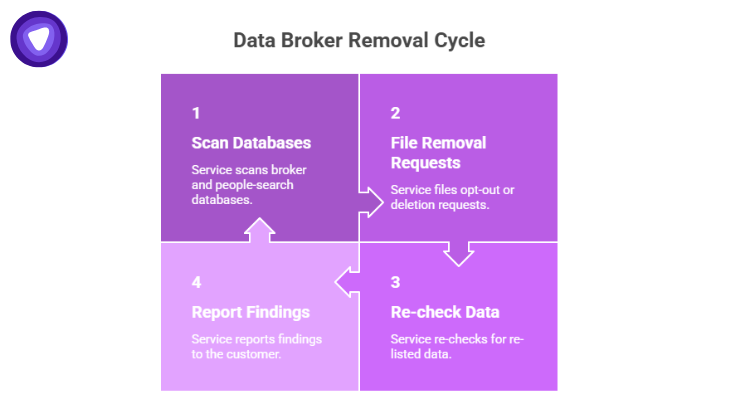
A white label data broker removal service scans broker and people-search databases for a customer’s exposed information. It then files opt-out or deletion requests on the customer’s behalf. All of this runs on the provider’s backend, delivered under the reseller’s own brand name. The customer never sees the provider. They only see the brand they already trust and pay for.
Most services follow a similar operating pattern once a customer signs up:
- Continuous scanning across a defined list of broker and people-search sites
- Opt-out or deletion requests filed through each broker’s own process
- Repeat scans, since brokers often relist data pulled from public records
- Reporting that shows what the scan found and what it removed
The re-check step matters most. A data broker can pull a record from a public filing months after a first removal. Without ongoing scans, a customer’s information quietly comes back.
Why Demand Keeps Rising
Adoption of data removal tools is still low, but interest is building fast. Only 6 percent of American adults have used a service like this so far. Among people who have not, 12 percent say they are highly likely to sign up within the next year. That is a pool of roughly 28 million potential customers in the US alone. Awareness, not interest, is the real bottleneck right now. The same survey found more than four in five American adults are at least moderately concerned about who can access their personal information online. Very few of them have done anything about it yet. That gap between concern and action is exactly what a removal service is built to close, and it explains why the category still has plenty of room to grow.
The underlying data broker industry keeps expanding at the same time. The global data broker market reached close to 278 billion dollars in 2024. Analysts project it will grow to roughly 512 billion dollars by 2033. That works out to about 7.3 percent growth a year, according to recent industry market research. More brokers and more data volume create more exposure for consumers. That gives people a reason to pay for ongoing removal instead of a one-time cleanup.
Regulation is starting to catch up too. California’s new state-run deletion platform went live on January 1, 2026. It lets residents file one request against every registered data broker in the state. Brokers must begin processing those requests by August 2026. Policy like this puts pressure on brokers outside California too. Many adopt similar standards on their own, well ahead of any legal mandate to do so.
The Business Case for Adding This Service
A VPN, antivirus, or identity protection brand already sells privacy as a core promise to its subscribers. A white label data broker removal service fits naturally next to that lineup. Customers who buy privacy tools are already primed to want their exposed data cleaned up. They do not need convincing that the problem exists. Adding removal as a bundled feature raises revenue per subscriber. It also gives a subscriber another reason to stay instead of canceling at renewal.
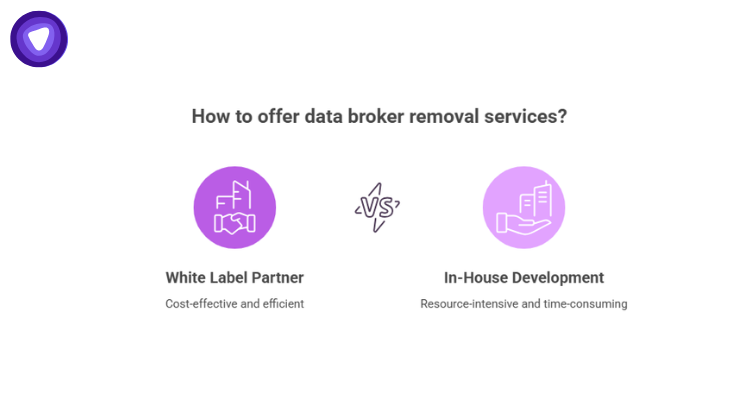
Building this capability in house is a different proposition entirely. It means mapping relationships with hundreds of brokers. Each one runs a different opt-out format. It means ongoing legal review across state and international privacy law. A brand would also need a scanning engine that can match a person’s data across inconsistent formats and naming conventions.
Most companies do not have the internal resources to justify that timeline. This is especially true when a tested partner network already exists and can be plugged in within weeks.
Who This Model Fits Best
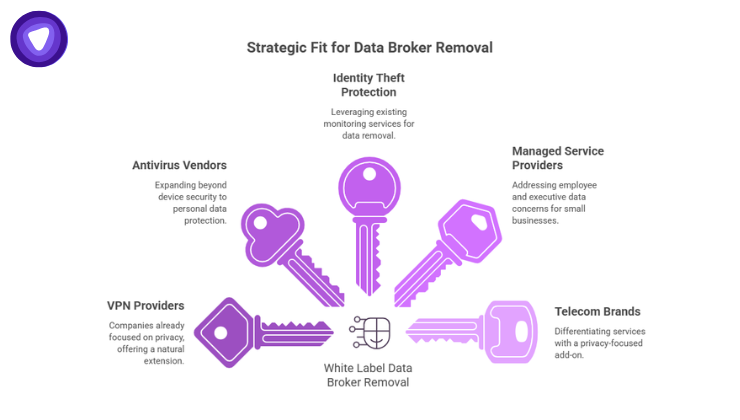
Not every brand can launch a white label data broker removal service right away and expect quick traction. It tends to work best for companies whose audience already thinks about privacy or security in some form.
- VPN providers already selling a privacy story to their subscriber base
- Antivirus and endpoint security vendors expanding past device protection
- Identity theft protection companies already monitoring for breaches and fraud
- Managed service providers whose clients ask about employee data exposure
- Telecom and ISP brands looking for a differentiated privacy add-on
A brand without an existing privacy or security product can still launch a removal service. It will just need more time and acquisition spend to build trust from zero, since customers have no prior reason to believe the brand can handle their data responsibly. The offer works better as an extension of an existing story than as a standalone launch.
Build vs Partner: A Direct Comparison
The decision usually comes down to speed, cost, and control. Few brands have the patience to compare both paths line by line before committing. Here is how the two paths compare on the factors that matter most to a reseller.
| Factor | Building In House | Partnering With a Provider |
| Time to launch | 12 to 24 months | A few weeks |
| Upfront cost | High engineering and legal spend | Low, subscription or revenue share |
| Broker coverage | Built one broker at a time | Inherited from an established network |
| Compliance ownership | Fully on the brand | Shared with the provider |
| Branding control | Full control by default | Full control, delivered under the brand’s name |
| Ongoing maintenance | Requires a dedicated internal team | Handled by the provider |
Branding control looks identical on paper. The real difference shows up in maintenance. A partner absorbs the work of tracking broker changes, so the brand’s team never touches that layer.
Core Components to Evaluate in a Provider
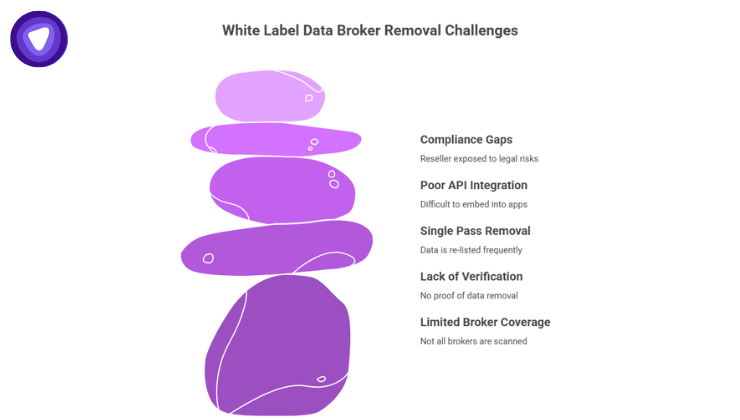
Before signing with a partner, a brand should confirm the white label data broker removal service actually covers the details that matter to customers. Coverage claims sound similar across vendors until a brand asks specific questions.
- Broker coverage and update frequency: ask how many brokers the service scans and how often the provider refreshes that list
- Verification and reporting: customers want proof of what the scan found and what it removed, not just a status message
- Re-scan cadence: brokers relist data often, so scheduled re-checks matter more than a single pass
- API access: a brand embedding removal into an existing app needs clean integration, not a bolted-on separate portal
- Compliance handling: the provider should already account for state and international privacy law
Ask each candidate the same set of questions side by side. Coverage claims are easy to make and hard to verify without a direct comparison.
Steps to Launch a White Label Data Broker Removal Service
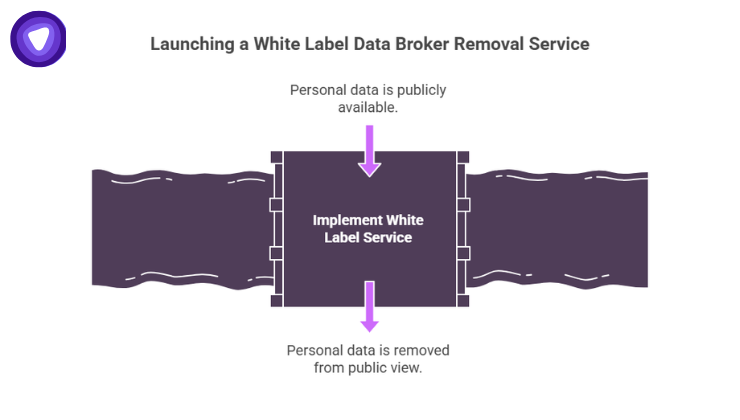
Launching does not require years of preparation. It requires a clear sequence of decisions, and a partner can support most of them directly.
Pick the Right Partner
Coverage numbers matter, but so does how the partner supports resellers day to day. Ask for a demo account and sample reporting. Ask for a clear turnaround time on removal requests too. A partner that cannot show real broker coverage data is not ready for a reseller relationship. That holds true no matter how polished the sales pitch sounds.
Define Scope and Packaging
A brand needs to decide how removal will show up to customers before pricing conversations start. Three common approaches work well:
- A standalone removal product sold on its own
- A bundled feature inside an existing VPN, security, or identity plan
- A tiered add-on, with basic scanning at one price and full removal at another
Price With Margin in Mind
Direct-to-consumer removal services commonly charge 15 to 20 dollars a month in the US market. On an annual plan, that usually works out to 120 to 150 dollars a year. A reseller should price against that benchmark first. Then factor in wholesale cost, support overhead, and the margin the business actually needs.
- Basic tier: scanning and exposure reporting only, no active removal
- Standard tier: scanning plus removal across the core broker network
- Premium tier: full removal coverage, faster re-scans, and priority support
Bundling the standard or premium tier into an existing plan tends to convert better. Selling removal as a cold, standalone purchase converts less often, since the customer has to be sold on the problem first.
Handle Compliance Language
A reseller brand needs its own privacy policy language, even with a white label backend running behind the product. That language should explain what data the service collects to perform removal. It should also state how the service processes removal requests and how long it retains records. International customers add another layer, since GDPR-style rules can apply alongside US state law. This protects the brand if a broker challenges or delays a request later.
Plan Onboarding and Support
Customers will have questions the first time they see an exposure report. A short onboarding flow should explain three things clearly. It should cover what the scan found, what action is happening next, and how long removal typically takes. Some brokers take up to 45 days to respond, so setting that expectation early avoids unnecessary support tickets.
Common Mistakes to Avoid
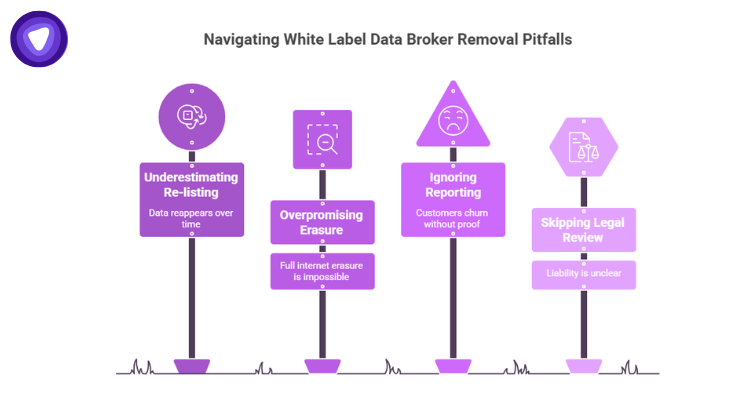
A few recurring pitfalls show up across white label removal launches, and most of them are avoidable with the right setup from day one.
- Underestimating relisting: a single removal pass looks clean in a demo, but it fades within months as brokers pull data from public records again
- Promising full internet erasure: no service can guarantee removal from every broker that exists today or gets created tomorrow
- Skipping reporting: customers who cannot see proof of removal tend to churn faster, even when the work is happening correctly in the background
- Skipping legal review: confirm who owns liability if a broker refuses or delays a deletion request past an agreed timeline
None of these mistakes are hard to fix. They just need to be addressed in the contract and the customer messaging before launch, not after the first complaint arrives.
Where PureVPN Fits In
Brands that already sell privacy and security tools are in the strongest position to add data broker removal, since their subscriber base is already primed for it. PureVPN’s data broker removal solution gives resellers a fully branded VPN product, with the infrastructure, support, and network already built. That is the same operating model that makes a removal add-on practical to launch without new engineering headcount.
For a business already running a white label VPN offering, layering in data broker removal is a logical next step. It works better as an extension of what the brand already sells than as a separate build. It extends the same privacy positioning the brand has already established. The partner model behind it is designed to move fast and stay compliant.
The gap between how concerned people are about their exposed data and how few have acted on it remains wide. Brands with an existing privacy or security audience do not need to build broker-tracking infrastructure from scratch. That work is already done. A working white label data broker removal service already exists in the market today. It is tested and ready to run under a new name. What is left is deciding how it fits into what a brand already sells, and how quickly a team wants to put it in front of customers.